


Call Us: 289-232-4229
Email: info@slsolutionsevents.ca
Call Us: 289-232-4229
Email: info@slsolutionsevents.ca





Your VP stops by with a simple request: "Can you ballpark the fall client event? Nothing crazy." You find a venue, multiply the banquet menu by 150 guests, add a DJ, and send the number up. Two months later the final invoice lands about a third higher, and nobody changed a thing.
Here's what happened. The most expensive line on any Toronto banquet menu is the one in the smallest font.
As a Toronto event company that reads those menus for a living, here's the honest version: per-person ranges, where the money goes, the Toronto charges that catch people off guard, and what can safely wait. All figures are in Canadian dollars.
TL;DR: Most single-day corporate events in downtown Toronto cost roughly $150 to $800 per person all-in, depending on format. A half-day meeting sits at the low end; a produced conference or plated gala sits at the high end. Food and beverage is the biggest line. Expect a service charge of 18 to 22 percent, with 13 percent HST applied to food and service combined, and hold 10 to 15 percent as contingency.
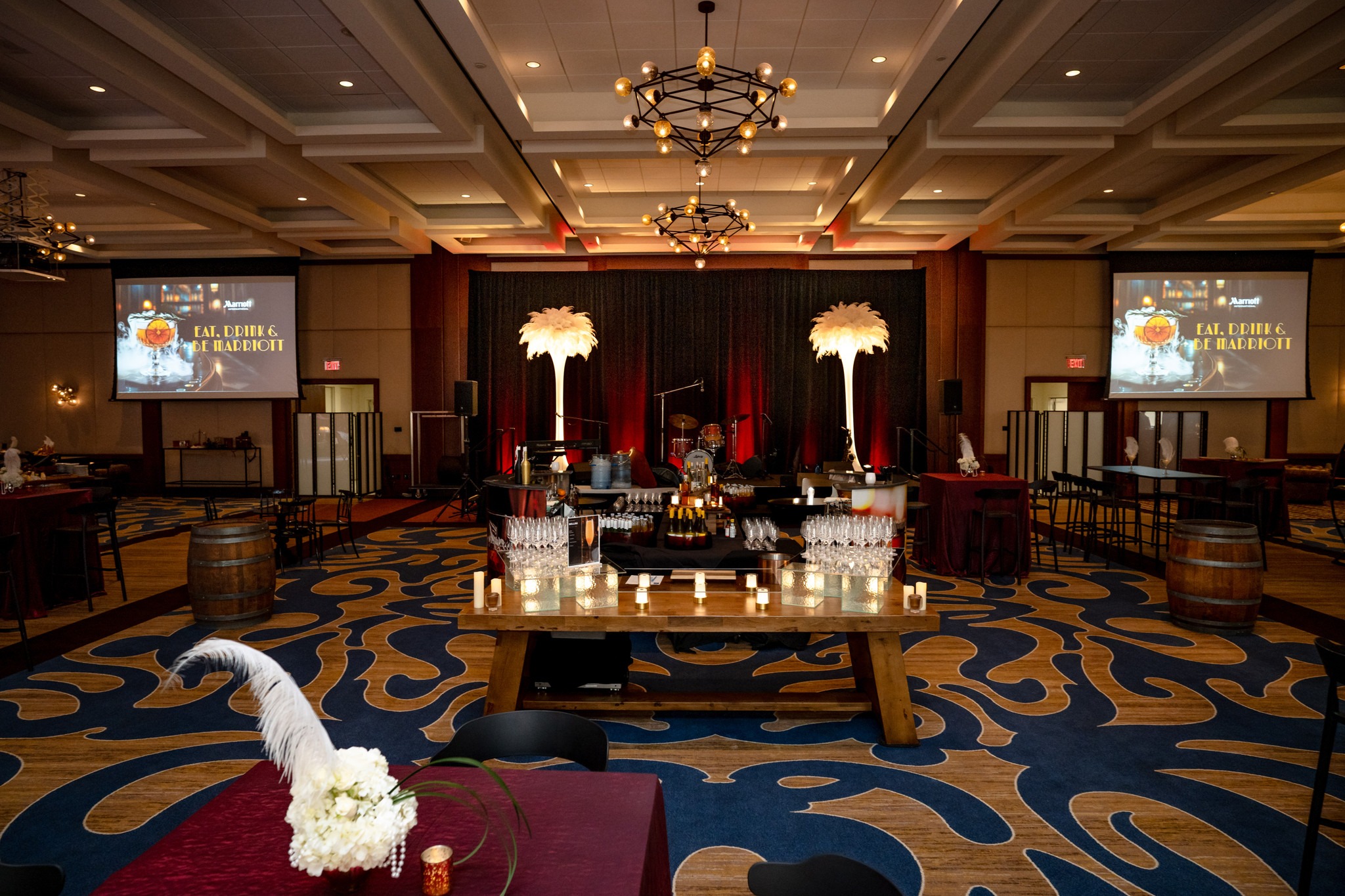
Most corporate events in downtown Toronto land between about $150 and $800 per person all-in, with overnight retreats running higher. Format matters more than headcount: a cocktail reception and a staged conference for the same 200 people can differ by several hundred dollars a head.
Here's how the 2026 ranges shake out:
Event format
Typical group size
All-in cost per person
Half-day or full-day meeting or workshop
20 to 80
$150 to $400
Team-building day (activity plus meals)
20 to 100
$150 to $400
Client reception or networking evening
75 to 200
$175 to $375
Holiday party or plated gala dinner
100 to 300
$225 to $550+
One-day conference with staged production
150 to 400
$350 to $800+
Two-day executive retreat (rooms included)
10 to 40
$900 to $2,000+
"All-in" here means venue, food and beverage, service charges, HST, AV, and basic event staffing. Planning fees, travel, and hotel rooms (except for the retreat) sit outside these numbers.
The spread comes from two places. Fixed costs like AV and room rental get divided across your headcount, so a 60-person conference often costs more per head than a 300-person one. And production scope escalates fast: two microphones and a projector is not an LED wall and a crew. Still choosing a format? Start with the corporate event formats we plan most often.
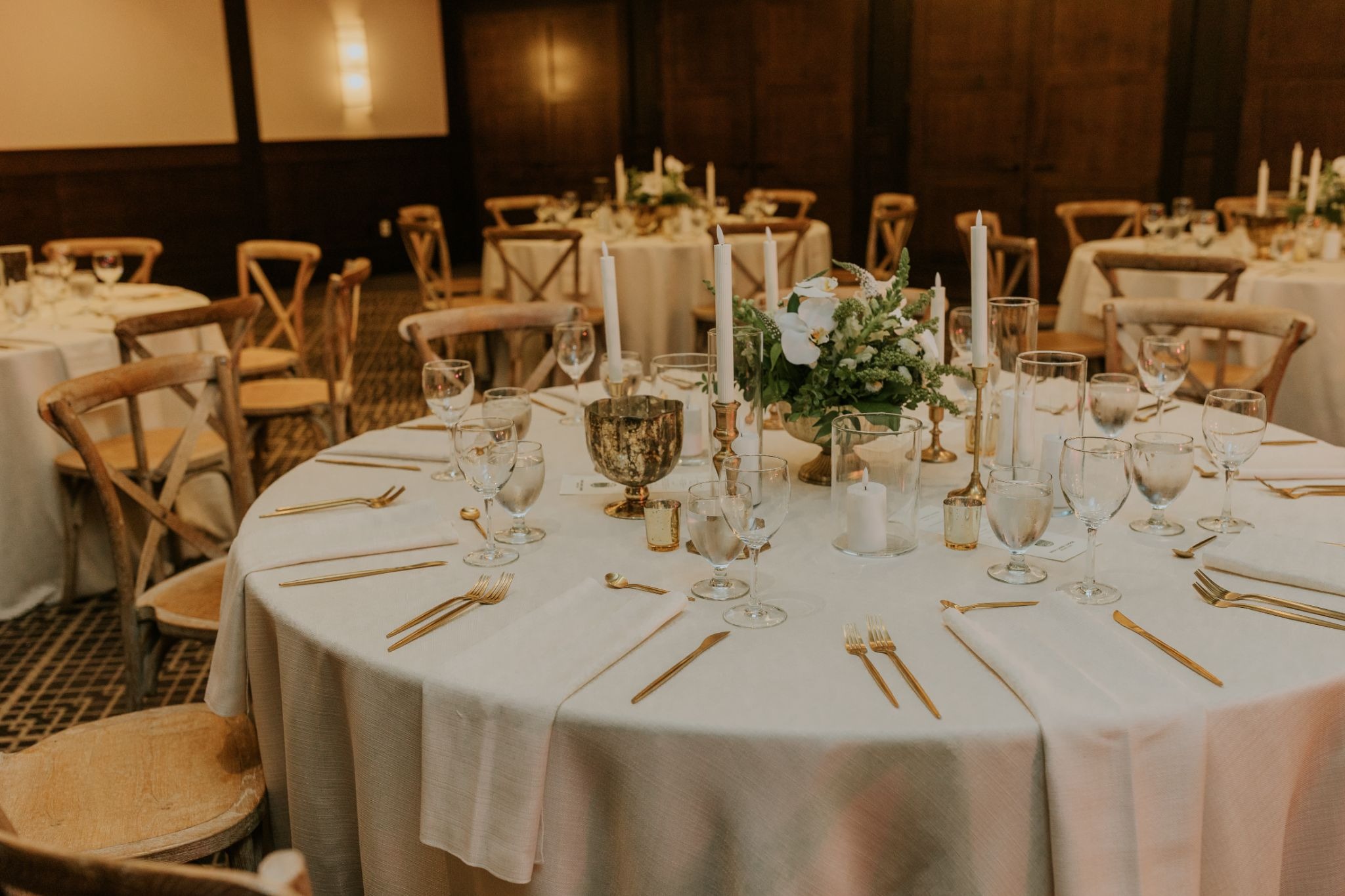
Food and beverage is almost always the biggest line, typically 35 to 50 percent of the total, followed by the venue and then AV and production. Staffing, décor, and the small stuff make up the rest.
Downtown plated dinners commonly start around $85 a head before service and tax, and clear $150 once premium proteins and wine enter the picture. Reception stations and canapés usually cost less per head, but the bar climbs with every hour it stays open.
Protein is where menus move most right now. Canada's Food Price Report 2026 forecast restaurant prices rising 4 to 6 percent in 2026, with meat posting the steepest increase of any category and Ontario tracking above the national average. Swapping a beef main for chicken or fish is often the single biggest lever on a catering quote.
Toronto venues price space one of two ways, and sometimes both: a room rental fee, or a food and beverage minimum you commit to spending. Minimums run from roughly $15,000 at smaller boutique spaces to $80,000 or more at flagship downtown ballrooms in peak season. The catch sits in the contract: if your headcount drops, the minimum doesn't.
A basic meeting setup (screen, projector, a few microphones, one technician) usually lands in the low thousands for a day. Staged production with an LED wall, lighting, and live camera work reaches five figures quickly, and the LED wall alone often runs mid-to-high four figures. At hotels, industry sources commonly put the venue's commission on in-house AV at 30 to 50 percent, and that cost lives inside your rates. Get one outside quote before you sign. It's leverage either way.
Staffing is the line people cut first and regret first. Registration, room captains, security, coat check, and an on-site lead all cost money, and complex days need more of them. Susan L. LoCicero at TD Wealth described one of those days perfectly: "Sharm, I truly appreciate your positive energy and get it done attitude; it was really what won it for us yesterday as we hosted 200 guests over the course of the day in 4 different programs." Four programs in one day is a staffing plan first and a menu second.

The costs that catch first-time planners off guard are rarely the big decisions. They're the percentages, labour rules, and exclusive-vendor clauses that stay invisible until the invoice arrives: service charges, union minimum calls, venue-exclusive suppliers, and a handful of small Toronto line items.
Most Toronto venues add a service charge of 18 to 22 percent to food and beverage, and some split it into a service charge plus a separate admin fee, so read both lines. In Ontario, the 13 percent HST then applies to the food and the service charge together. A $100 dinner at 20 percent service becomes $120, and HST takes it to about $136. Multiply that across 150 guests and a bar tab, and the invoice from our opening stops being a mystery.
Many Toronto theatres, heritage venues, and convention facilities use unionized stage crews, which usually means minimum calls (four hours is common) and premium rates for evening and overnight work. A 20-minute cable fix can bill as a four-hour call, and a load-out that drifts past midnight can shift to double time. Build the schedule around those rules and the budget stops leaking.
The Metro Toronto Convention Centre keeps exclusive control of food and beverage and of internet service, where every connected device needs its own paid access, and rigging runs through its exclusive labour broker. Many hotels have exclusive AV partners and charge patch fees if you bring in your own. None of this is unreasonable, but all of it belongs in the budget from day one. Our event logistics and vendor management work starts with exactly these clauses.
Coat check is a real Toronto budget line for most of the year. The MTCC's coat check service runs from mid-September to mid-May, which tells you everything about our coat season. Music licensing through SOCAN and Re:Sound is modest, usually tens to a few hundred dollars depending on room capacity, and roughly doubles if there's dancing. Room blocks carry 13 percent HST plus Toronto's 6 percent Municipal Accommodation Tax, which dropped back from a temporary 8.5 percent on August 1, 2026.
Most event management companies in Toronto price planning in one of three ways: a percentage of the total event budget (commonly 10 to 20 percent), a flat project fee, or an hourly rate for consulting and partial scope, which for experienced corporate planners generally falls between $75 and $200 an hour.
Flat fees give finance a fixed number. Percentage fees scale with complexity, but ask whether the percentage is locked to the original budget or recalculated on final spend, because a budget that grows quietly takes the fee with it. Hourly suits a defined slice of work, like contract review, and gets unpredictable on anything bigger.
What you're actually paying for is capacity and judgment: someone who spots the load-out that's about to drift past midnight, knows which minimums have room to move, and absorbs the hundred small decisions between contract and show day. Katie Stevens at Marriott Hotels of Canada summed up that last part better than we could: "you do so much, and you deal with all my crazy e-mails..." Our event organizer services are built around exactly that workload.
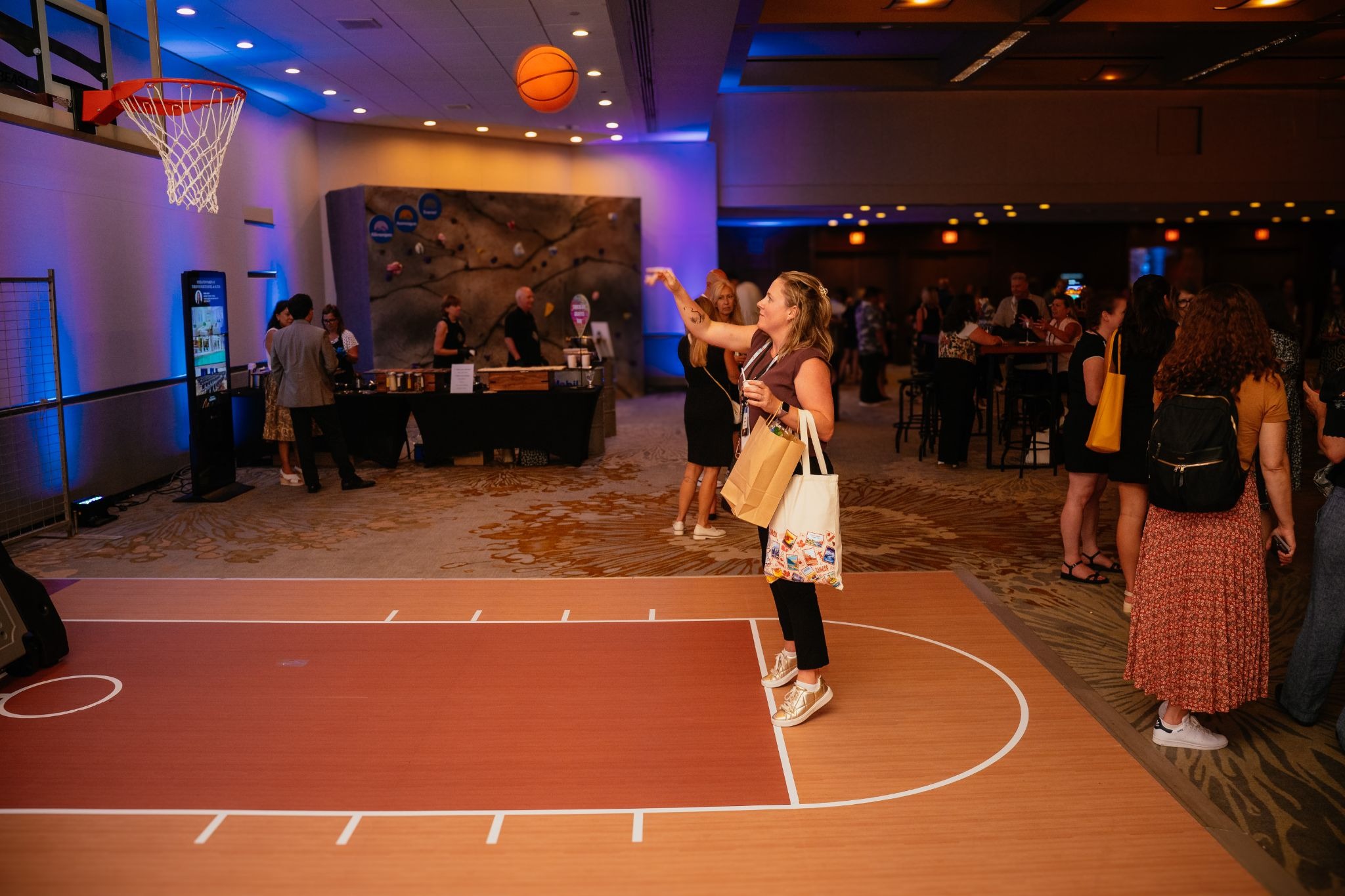
Lock in the numbers everything else depends on: headcount, venue and minimums, AV approach, and contingency. Leave the details that get clearer with time: menu, décor, and entertainment.
Timing is the other lever. January through March is traditionally Toronto's quietest stretch for event space, when venues are most open to waiving room fees or softening minimums. A "holiday party" in mid-January can cost noticeably less than the same party on a December Thursday, and nobody's calendar is fighting it.
Most companies don't need another quote. They need someone who can tell them what that quote will look like after the service charge, the union call, and the coat check.
We build budgets backwards from the final invoice: loaded per-person pricing, labour rules mapped against the schedule, and exclusive-vendor clauses flagged before anyone signs. Then our on-site event team runs show day against that same plan, so the number finance approved in spring is still the number on the invoice in fall.
If you have an event on the calendar and a number you need to defend to finance, send us the brief. We'll tell you where it's realistic, where it's tight, and where there's room to breathe.
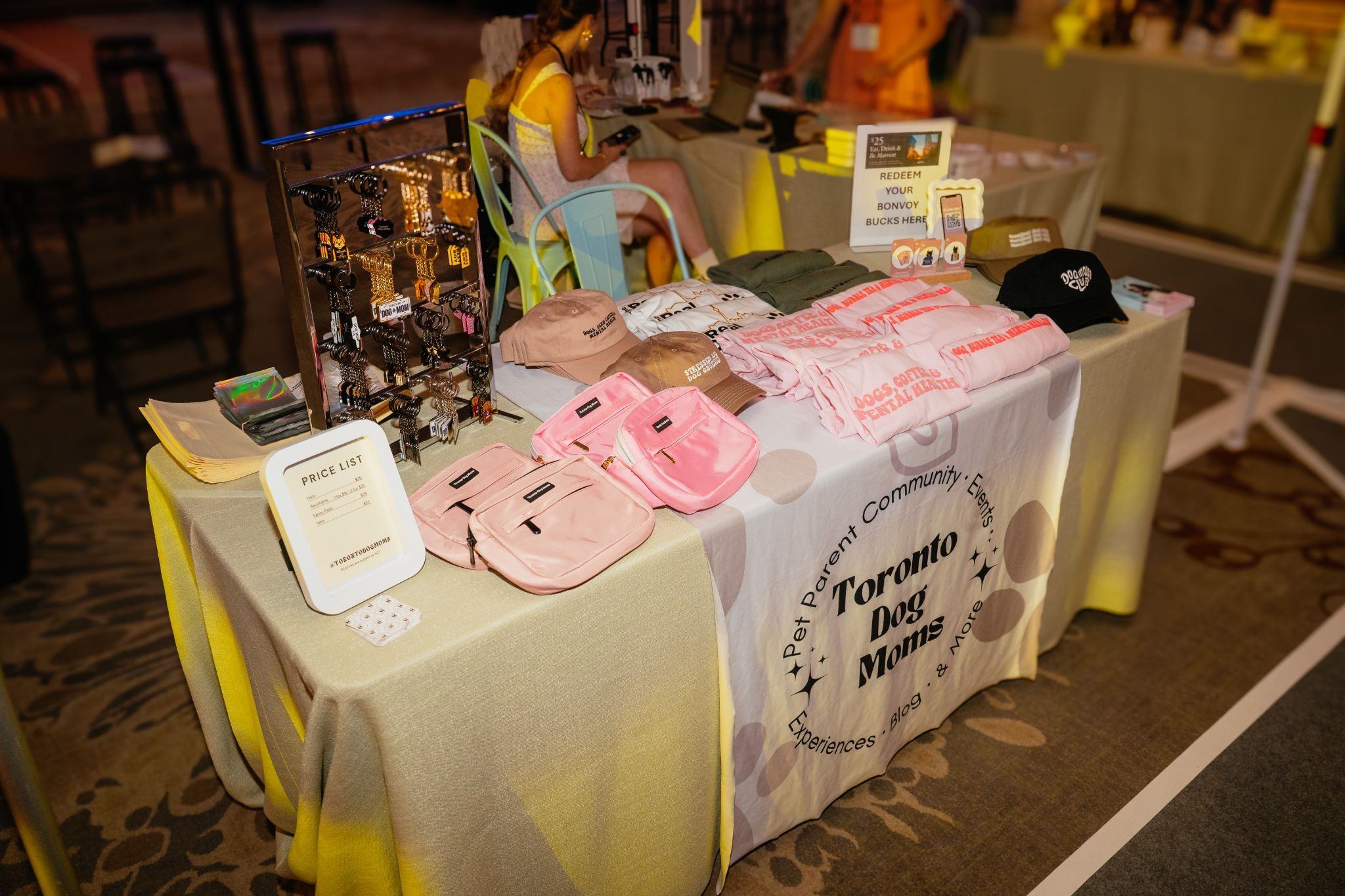
Most single-day corporate events in downtown Toronto run roughly $150 to $800 per person all-in, including venue, food and beverage, service charges, HST, AV, and basic staffing. Meetings and team-building days typically cost $150 to $400 per person, receptions $175 to $375, plated galas $225 to $550 or more, and produced one-day conferences $350 to $800 or more. Overnight executive retreats with rooms commonly run $900 to $2,000 or more per person.
Most Toronto venues add a service charge of roughly 18 to 22 percent to food and beverage, sometimes split into a service charge and a separate administration fee. In Ontario, the 13 percent HST applies to the food and the service charge combined. A $100 per-person menu with a 20 percent service charge therefore costs about $136 per person before any bar charges are added.
Hold 10 to 15 percent of the total budget as contingency, tracked as its own line item. It covers costs that appear late in planning: crew overtime when a load-out runs long, last-minute AV additions, headcount changes against a food and beverage minimum, and vendor substitutions. Budgets that treat contingency as spare money for early upgrades usually have nothing left when a real surprise arrives in the final weeks.
Event management companies in Toronto typically charge in one of three ways: a percentage of the total event budget, commonly 10 to 20 percent; a flat project fee based on scope; or an hourly rate of roughly $75 to $200 for consulting or partial services. For percentage-based fees, confirm whether the fee is calculated on the original approved budget or on final spend, since that changes the fee if the budget grows.
Ask about the service charge and any administration fee, whether HST applies to both, the food and beverage minimum and attrition terms, and exclusive vendor requirements for catering, AV, internet, and rigging. Also confirm patch fees for outside AV, union crew minimum calls and overtime rules, load-in and load-out windows, coat check, security, and SOCAN and Re:Sound music licensing. Getting these answers in writing turns a menu price into a real budget.
Toronto hotel rooms carry 13 percent HST plus a 6 percent Municipal Accommodation Tax, and the MAT itself is subject to HST, so taxes add roughly 20 percent to the nightly room rate. The MAT returned to 6 percent on August 1, 2026, after a temporary increase to 8.5 percent that ran from June 2025 through July 2026. Room-block quotes issued before that change may still show the higher rate.
January through March is traditionally the softest period for Toronto event venues, and it is when venues are most likely to waive room rental fees or reduce food and beverage minimums. December Thursdays and Fridays are among the most competitive dates of the year because of holiday parties. Moving a holiday celebration into January is one of the simplest ways to stretch the same corporate event budget further.


